Buy rebelbee.eu ?
We are moving the project
rebelbee.eu .
Are you interested in purchasing the domain
rebelbee.eu ?
domain@kv-gmbh.de · 0541-91531010
Buy rebelbee.eu ?
How is the partitive formed?
The partitive is formed in French by using the preposition "de" followed by the definite article "le," "la," or "les." This combination contracts to form "du," "de la," or "des" before a singular or plural noun, respectively. For example, "some bread" is "du pain" and "some apples" is "des pommes." The partitive is used to indicate an unspecified quantity or portion of a mass noun. **
What is the French partitive article?
The French partitive article is used to indicate an unspecified quantity of a noun that cannot be counted. It is formed by combining the preposition "de" with the definite article corresponding to the noun's gender and number. For example, "du" is used with masculine singular nouns, "de la" with feminine singular nouns, and "des" with plural nouns. The partitive article is used in French to express concepts like some, any, or a part of something. **


Similar search terms for Partitive
Top-Angebote
Products related to Partitive:
-
Revolution Cooking Revolution InstaGLO R180 Connect - 9' x 12'2-slice high speed smart toaster featuring patented InstaGLO heating technology, auto lift and lower, and wifi connectivity for local time and weather - perfect toast, rain or shine399,00 $*Shipping: 0,00 $Secure redirect to the provider
-
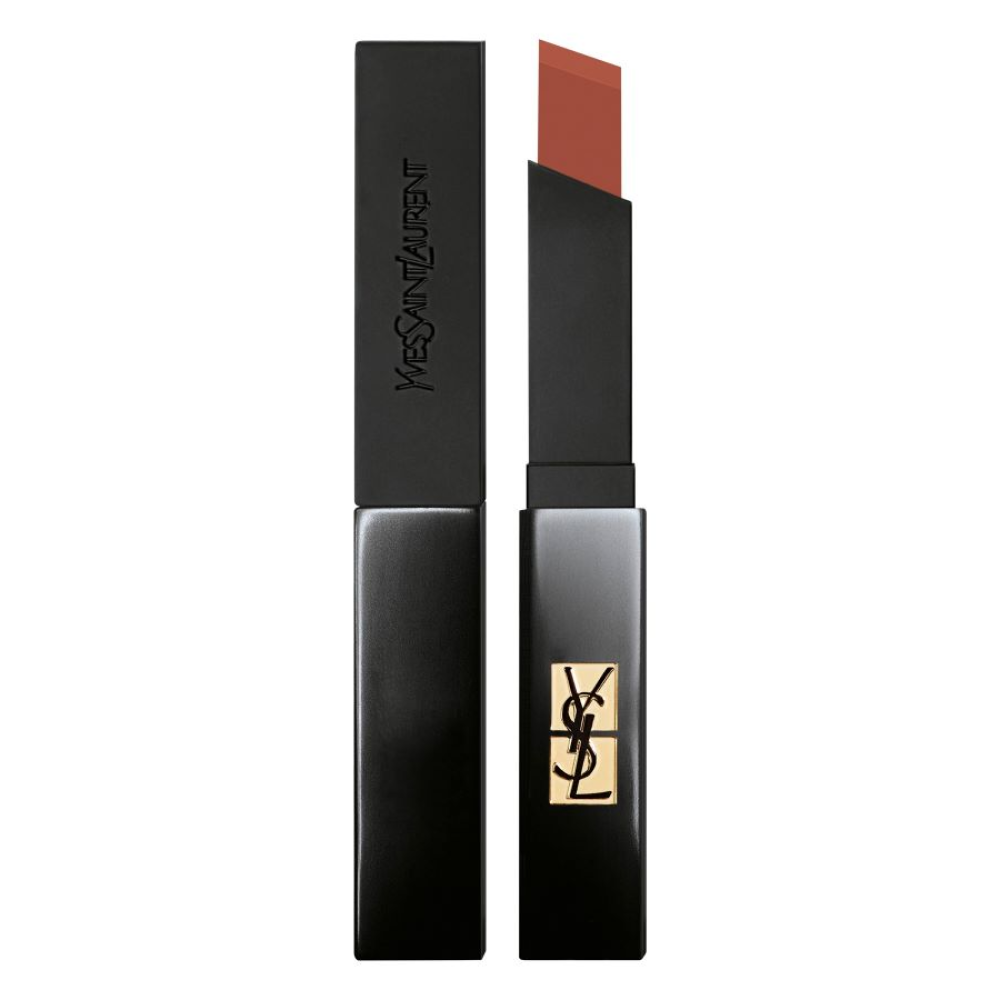
Yves Saint Laurent Rouge Pur Couture The Slim Velvet Radical Intensly Pigmented Demi-Matte Lipstick 2g 312 Unconventional NudeA lipstick. Rouge Pur Couture The Slim Velvet Radical is an intensely pigmented lipstick that provides all-day comfort with a long-lasting effect. Intensely pigmented demi-matte finish. Long-lasting wear for a flawless finish. Anti-dry technology ensures comfort throughout the day. Shape and line upper lip with precision tip.31,19 £*Shipping: 5,34 £Secure redirect to the provider
-
Cotril Freedom Hair & Body Cleanser 250mLA shower gel. It a moisturizing shower gel for frequent use. Thanks to its plant complex derived from rice, it protects from the blue light of the screens that tends to take away the shine and weaken structures, leaving a feeling of cleanliness and well-being on body and hair. Gently cleanses the body and hair by eliminating impurities caused by pollution and heavy metals.18,02 £*Shipping: 7,11 £Secure redirect to the provider
-
Bluebird Recovery - Freedom From Our AddictionsThe Number One Sunday Times Bestseller from Russell Brand. 'This is the age of addiction, a condition so epidemic, so all encompassing and ubiquitous that unless you are fortunate enough to be an extreme case, you probably don't know that you have it. What unhealthy habits and attachments are holding your life together? Are you unconsciously dependent on food? Bad relationships? A job that doesn't fulfill you? Numb, constant perusal of your phone, looking for what? My qualification for writing this book is not that I am better than you, it's that I am worse. I am an addict, addicted to drugs, alcohol, sex, money, love and fame.' The program in Recovery has given Russell Brand freedom from all addictions and it will do the same for you. This system offers nothing less than liberation from self-centredness, a new perspective, freedom from the illusion of suffering for anyone who is willing to take the necessary steps.4,95 £*Shipping: 1,99 £Secure redirect to the provider



-
What is the rule for the partitive article?
The rule for the partitive article in French is to use "de" followed by the definite article (le, la, les) to indicate an unspecified quantity or some of a mass noun. For example, "du" is used for masculine singular nouns, "de la" for feminine singular nouns, and "des" for plural nouns. The partitive article is used when referring to an unknown or unspecified quantity of something. **
-
What are partitive articles in the French language?
Partitive articles in French are used to indicate an unspecified quantity of a noun. They are used when referring to a portion or some of a mass noun, such as food or liquid. The partitive articles in French are "du" (for masculine nouns), "de la" (for feminine nouns), and "de l'" (for nouns starting with a vowel or silent "h"). These articles are essential for expressing the concept of some or any in French. **
-
How do you form the genitive partitive in Latin?
In Latin, the genitive partitive is formed by using the genitive case of the noun followed by the word "partis" or "partis" (depending on the gender of the noun) to indicate a part of the whole. For example, if the noun is "puella" (girl), the genitive partitive would be "puellae partis" to indicate "part of the girl." This construction is used to express the idea of "some of" or "a part of" something. **
-
When do you use the partitive article in French?
The partitive article in French is used to indicate an unspecified quantity of a mass noun. It is used when referring to a part of a whole, or an unspecified amount of something. For example, "du" is used for masculine nouns, "de la" for feminine nouns, and "de l'" for nouns starting with a vowel or silent "h". It is important to use the partitive article when talking about food, drinks, or other uncountable nouns in French. **


What are partitive articles and quantity increases in French?
Partitive articles in French are used to indicate an unspecified quantity of a noun. They are used with uncountable nouns or when referring to a portion of something. Quantity increases in French involve using words like "plus de" (more), "beaucoup de" (a lot of), or "trop de" (too much) to indicate an increase in the quantity of something. These expressions are used to specify a larger amount of a noun compared to using just the partitive article. **
Can you please help me with the partitive article?
The partitive article is used in French to indicate an unspecified quantity of something. It is often used with uncountable nouns to express "some" or "any" in English. The partitive article changes depending on the gender and number of the noun it precedes. For example, "du" is used before masculine singular nouns, "de la" before feminine singular nouns, and "des" before plural nouns. It is important to use the correct partitive article to indicate the appropriate quantity in French. **
Top-Angebote
Products related to Partitive:
-
Cotril Freedom Hydrating Cream 150mLA body cream. It an ultra-light moisturizing body cream for daily use. The natural level of moisture and elasticity is restored, creating a feeling of lightness and well-being. The cream is easily absorbed without leaving any grease and ensures velvety skin for a long time. Apply to the skin and massage until fully absorbed.24,06 £*Shipping: 5,34 £Secure redirect to the provider
-
Rottefella Powerbox NTN Freedom (Medium)Adjust stiffness with your Rottefella Freedom NTN bindings utilising the Powerbox NTN Replace your older cartridge system with the Powerbox NTN system, offering you choices to precisely adjust the flex in your bindings using either soft or medium bolt hardware.102,95 £*Shipping: 0,00 £Secure redirect to the provider
-
Revolution Cooking Revolution InstaGLO R180 Connect - 9' x 12'2-slice high speed smart toaster featuring patented InstaGLO heating technology, auto lift and lower, and wifi connectivity for local time and weather - perfect toast, rain or shine399,00 $*Shipping: 0,00 $Secure redirect to the provider
-
Yves Saint Laurent Rouge Pur Couture The Slim Velvet Radical Intensly Pigmented Demi-Matte Lipstick 2g 312 Unconventional NudeA lipstick. Rouge Pur Couture The Slim Velvet Radical is an intensely pigmented lipstick that provides all-day comfort with a long-lasting effect. Intensely pigmented demi-matte finish. Long-lasting wear for a flawless finish. Anti-dry technology ensures comfort throughout the day. Shape and line upper lip with precision tip.31,19 £*Shipping: 5,34 £Secure redirect to the provider
-
How is the partitive formed?
The partitive is formed in French by using the preposition "de" followed by the definite article "le," "la," or "les." This combination contracts to form "du," "de la," or "des" before a singular or plural noun, respectively. For example, "some bread" is "du pain" and "some apples" is "des pommes." The partitive is used to indicate an unspecified quantity or portion of a mass noun. **
-
What is the French partitive article?
The French partitive article is used to indicate an unspecified quantity of a noun that cannot be counted. It is formed by combining the preposition "de" with the definite article corresponding to the noun's gender and number. For example, "du" is used with masculine singular nouns, "de la" with feminine singular nouns, and "des" with plural nouns. The partitive article is used in French to express concepts like some, any, or a part of something. **
-
What is the rule for the partitive article?
The rule for the partitive article in French is to use "de" followed by the definite article (le, la, les) to indicate an unspecified quantity or some of a mass noun. For example, "du" is used for masculine singular nouns, "de la" for feminine singular nouns, and "des" for plural nouns. The partitive article is used when referring to an unknown or unspecified quantity of something. **
-
What are partitive articles in the French language?
Partitive articles in French are used to indicate an unspecified quantity of a noun. They are used when referring to a portion or some of a mass noun, such as food or liquid. The partitive articles in French are "du" (for masculine nouns), "de la" (for feminine nouns), and "de l'" (for nouns starting with a vowel or silent "h"). These articles are essential for expressing the concept of some or any in French. **
Similar search terms for Partitive
-
Cotril Freedom Hair & Body Cleanser 250mLA shower gel. It a moisturizing shower gel for frequent use. Thanks to its plant complex derived from rice, it protects from the blue light of the screens that tends to take away the shine and weaken structures, leaving a feeling of cleanliness and well-being on body and hair. Gently cleanses the body and hair by eliminating impurities caused by pollution and heavy metals.18,02 £*Shipping: 7,11 £Secure redirect to the provider
-
Bluebird Recovery - Freedom From Our AddictionsThe Number One Sunday Times Bestseller from Russell Brand. 'This is the age of addiction, a condition so epidemic, so all encompassing and ubiquitous that unless you are fortunate enough to be an extreme case, you probably don't know that you have it. What unhealthy habits and attachments are holding your life together? Are you unconsciously dependent on food? Bad relationships? A job that doesn't fulfill you? Numb, constant perusal of your phone, looking for what? My qualification for writing this book is not that I am better than you, it's that I am worse. I am an addict, addicted to drugs, alcohol, sex, money, love and fame.' The program in Recovery has given Russell Brand freedom from all addictions and it will do the same for you. This system offers nothing less than liberation from self-centredness, a new perspective, freedom from the illusion of suffering for anyone who is willing to take the necessary steps.4,95 £*Shipping: 1,99 £Secure redirect to the provider
-
Penguin J Krishnamurti Finding Inner Freedom 3 Books Collection Set (Freedom from the Known, The First and Last Freedom, What Are You Doing With Your Life?)J Krishnamurti Finding Inner Freedom 3 Books Collection Set (Freedom from the Known, The First and Last Freedom, What Are You Doing With Your Life?) Freedom from the Known As humans, we have the power to make conscious choices. And yet, we are heavily influenced by everything from social media and the news to the people we surround ourselves with. We begin to focus on what is expected by others, not what we want for ourselves. In Freedom From The Known, globally respected spiritual leader and philosophical thinker Jiddu Krishnamurti reveals how we can free ourselves radically and immediately from the tyranny of the expected. Seen as one of Krishnamurti's most accessible works, this empowering guide will help you to gain a more meaningful perspective on life, helping you to: Break free from fear and expectation Learn to understand yourself and what you truly want Improve your relationships – with others and with yourself Learn to live with clarity, presence, and inner peace Written with eye-opening clarity, this timeless book offers a radical approach to living fully in the present moment, without fear, conflict, or limitation. The First and Last Freedom If truth can set us free, where do we find it? In The First and Last Freedom, Krishnamurti argues that we will not find truth in formal institutions, nor in organised religions and their dogmas, nor in any guru or outside authority; for, according to Krishnamurti, truth can only be realised through self-understanding. Controversial and challenging, yet always enlightening, Krishnamurti guides us through society’s common concerns, such as suffering and fear, love and loneliness, sex and death, the meaning of life, the nature of God, and personal transformation - consistently relating these topics to the essential search for pure truth and perfect freedom. This classic philosophical and spiritual study offers wisdom and insights particularly suited to our own uncertain times. What Are You Doing With Your Life? Who are you? What are you? What do you want from life? One of the world’s great philosophical teachers, Krishnamurti, offers his inspiring wisdom on many of life’s hurdles from relationships and love, to anxiety and loneliness. He answers such questions as ‘What is the significance of life?’ and 'How do I live life to the full?' to reveal the best way of being true to yourself. Read by millions from all walks of life, Krishnamurti shows us there is no path, no higher authority, no guru to follow, and that ultimately it is our own responsibility as to how we live our lives.14,99 £*Shipping: 2,99 £Secure redirect to the provider
-
Charlotte Tilbury Matte Revolution Berry Rose 455 Matte Revolution Size:Darlings, discover this pout-perfecting matte lipstick in a divine rosy-hue that lights up every skin tone! Glamorous and seductive, First Dance is a love-blushed berry-rose hue that's perfect to dial up your lip look from dawn to dusk!32,00 £*Shipping: 2,95 £Secure redirect to the provider
-
How do you form the genitive partitive in Latin?
In Latin, the genitive partitive is formed by using the genitive case of the noun followed by the word "partis" or "partis" (depending on the gender of the noun) to indicate a part of the whole. For example, if the noun is "puella" (girl), the genitive partitive would be "puellae partis" to indicate "part of the girl." This construction is used to express the idea of "some of" or "a part of" something. **
-
When do you use the partitive article in French?
The partitive article in French is used to indicate an unspecified quantity of a mass noun. It is used when referring to a part of a whole, or an unspecified amount of something. For example, "du" is used for masculine nouns, "de la" for feminine nouns, and "de l'" for nouns starting with a vowel or silent "h". It is important to use the partitive article when talking about food, drinks, or other uncountable nouns in French. **
-
What are partitive articles and quantity increases in French?
Partitive articles in French are used to indicate an unspecified quantity of a noun. They are used with uncountable nouns or when referring to a portion of something. Quantity increases in French involve using words like "plus de" (more), "beaucoup de" (a lot of), or "trop de" (too much) to indicate an increase in the quantity of something. These expressions are used to specify a larger amount of a noun compared to using just the partitive article. **
-
Can you please help me with the partitive article?
The partitive article is used in French to indicate an unspecified quantity of something. It is often used with uncountable nouns to express "some" or "any" in English. The partitive article changes depending on the gender and number of the noun it precedes. For example, "du" is used before masculine singular nouns, "de la" before feminine singular nouns, and "des" before plural nouns. It is important to use the correct partitive article to indicate the appropriate quantity in French. **
* All prices are inclusive of VAT and, if applicable, plus shipping costs. The offer information is based on the details provided by the respective shop and is updated through automated processes. Real-time updates do not occur, so deviations can occur in individual cases. ** Note: Parts of this content were created by AI.