Buy rebelbee.eu ?
We are moving the project
rebelbee.eu .
Are you interested in purchasing the domain
rebelbee.eu ?
domain@kv-gmbh.de · 0541-91531010
Buy rebelbee.eu ?
Can gender-neutral language never completely destroy the freedom of language?
Gender-neutral language aims to promote inclusivity and equality by avoiding gender-specific terms. While it may change the way language is used, it does not necessarily destroy the freedom of language. Instead, it expands the possibilities of expression by offering alternative ways to communicate without reinforcing gender stereotypes. Language evolves over time, and gender-neutral language is a reflection of the changing social norms and values. Therefore, it does not restrict the freedom of language but rather enhances it by accommodating diverse perspectives and identities. **
What does it mean when it is said that a programming language is machine-independent? What makes a programming language machine-independent?
When a programming language is said to be machine-independent, it means that the code written in that language can be executed on different types of computer hardware without needing to be modified. This is possible because machine-independent languages are designed to be translated into machine code by a compiler or interpreter, which allows the code to be executed on any machine that has a compatible compiler or interpreter. The key to machine independence is the ability of the language to abstract away the specific details of the underlying hardware, allowing the same code to run on different machines without modification. **


Similar search terms for Language
Top-Angebote
Products related to Language:
-
KC Cubs: Educational Rug: ABC Alphabet ASL Sign Language, 3x5' PlaymatKC CUBS 3X5 ABC ALPHABET ASL SIGN LANGUAGE RUG - Introduce your child to the world of American Sign Language (ASL) in the most colorful and engaging way with the KC Cubs ASL Alphabet Educational Rug.53,99 $*Shipping: 0,00 $Secure redirect to the provider
-
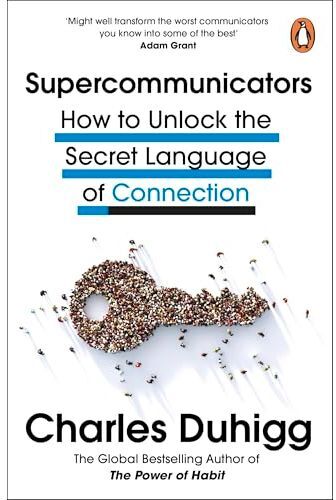
Penguin Supercommunicators: How to Unlock the Secret Language of Connection by Charles DuhiggWho and what are supercommunicators? They're the people who can steer a conversation to a successful conclusion. They are able to talk about difficult topics without giving offence. They know how to make others feel at ease and share what they think. They're brilliant facilitators and decision-guiders. How do they do it? In this groundbreaking new book, Charles Duhigg unravels the secrets of the supercommunicators to reveal the art – and the science – of successful communication. He unpicks the different types of everyday conversation and pinpoints why some go smoothly while others swiftly fall apart. He reveals the conversational questions and gambits that bring people together. And he shows how even the most tricky of encounters can be turned around. In the process, he shows why a CIA operative was able to win over a reluctant spy, how a member of a jury got his fellow jurors to view an open-and-shut case differently, and what a doctor found they needed to do to engage with a vaccine sceptic. Above all, he reveals the techniques we can all master to successfully connect with others, however tricky the circumstances. Packed with fascinating case studies and drawing on cutting-edge research, this book will change the way you think about what you say, and how you say it.9,99 £*Shipping: 2,99 £Secure redirect to the provider
-
Vintage The Language of Kindness: the Costa-Award winning #1 Sunday Times Bestseller by Christie WatsonChristie Watson was a nurse for twenty years. Taking us from birth to death and from A&E to the mortuary, The Language of Kindness is an astounding account of a profession defined by acts of care, compassion and kindness. We watch Christie as she nurses a premature baby who has miraculously made it through the night, we stand by her side during her patient's agonising heart-lung transplant, and we hold our breath as she washes the hair of a child fatally injured in a fire, attempting to remove the toxic smell of smoke before the grieving family arrive. In our most extreme moments, when life is lived most intensely, Christie is with us. She is a guide, mentor and friend. And in these dark days of division and isolationism, she encourages us all to stretch out a hand.5,99 £*Shipping: 2,99 £Secure redirect to the provider
-
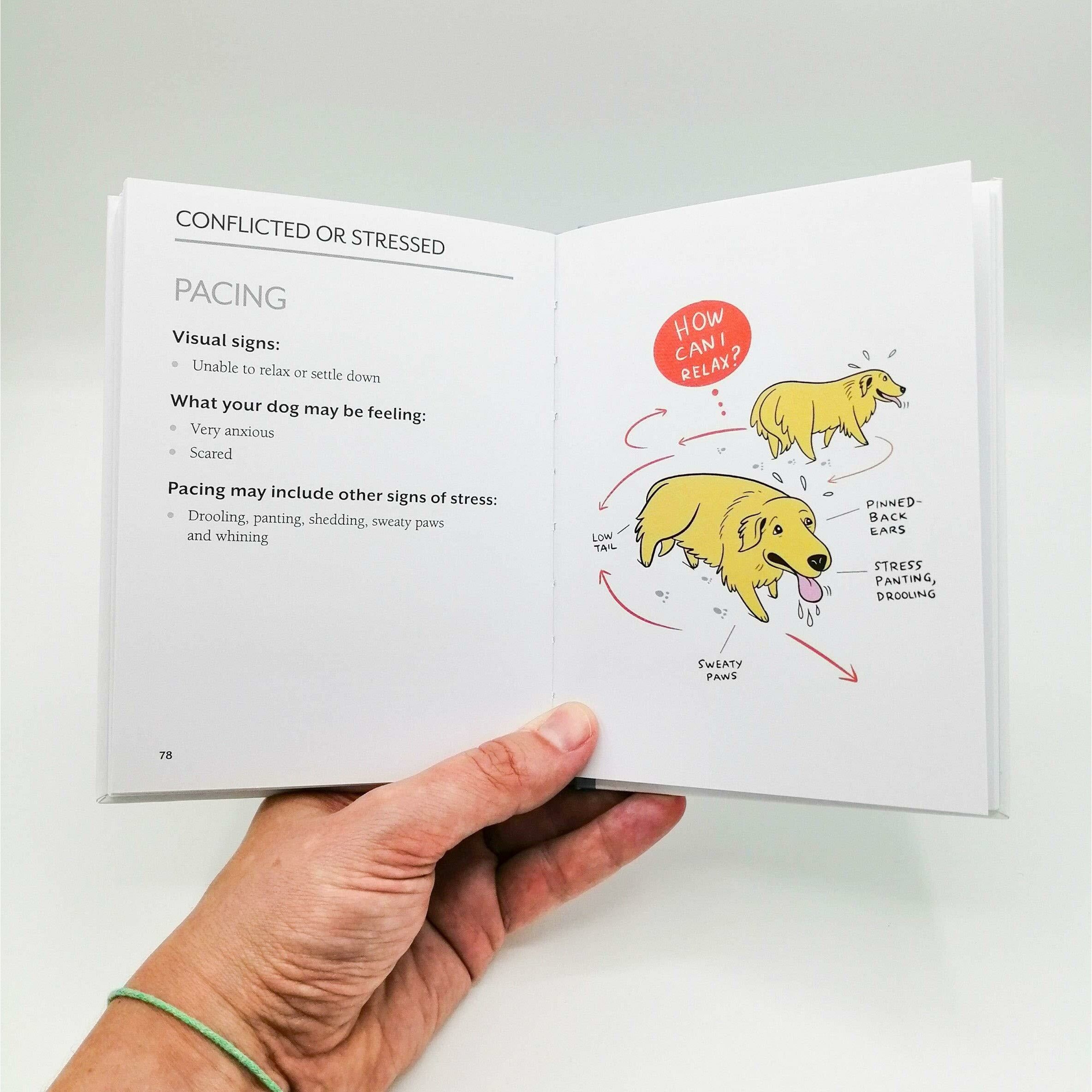
Summersdale Publishers Doggie Language: A Dog Lovers Guide to Understanding Your Best Friend by Lili ChinDogs communicate with so much more than barks and tail wags. Misreading doggie body language makes life challenging for dogs and their humans. This small but mighty book is your perfect illustrated guide to seeing and understanding the subtle visual cues and interpreting the behaviours used by your beloved pup to express how they’re feeling. The more we notice and listen to what our dogs are trying to tell us, the more we can improve our relationship with our best friends, helping them to feel safe and happy. Original illustrations help you compare similar facial expressions, body language and gestures Interpret your dog's cues and learn how your dog uses his ears, eyes, mouth, tail and posture to communicate with you Spot the signals your dog is trying to give you to tell you they're stressed or conflicted3,95 £*Shipping: 1,99 £Secure redirect to the provider


-
'Participate or empower?'
Participate and empower are both important concepts in creating positive change. Participating involves actively engaging in activities, discussions, and decision-making processes. Empowering, on the other hand, involves giving individuals the tools, resources, and support they need to take control of their own lives and make their own decisions. Both are important in creating inclusive and sustainable change, as participation allows for diverse perspectives and voices to be heard, while empowerment enables individuals to take ownership of their own lives and communities. Ultimately, a combination of both participation and empowerment is necessary for creating meaningful and lasting change. **
-
Which language is meant: B-language or Bi-language?
The term "B-language" typically refers to a second language that a person learns, while "Bi-language" is not a commonly used term in language learning. Therefore, it is more likely that the question is referring to "B-language." This term is often used in the context of bilingualism and second language acquisition, where individuals develop proficiency in a language other than their native or first language. **
-
Language hygiene or language police?
Language hygiene refers to the practice of maintaining and promoting linguistic standards and correctness, while language police refers to the enforcement of these standards through strict and often authoritarian means. While it is important to uphold linguistic standards, the approach should be one of education and encouragement rather than coercion and punishment. Language hygiene can help maintain clarity and understanding in communication, but it should be approached with sensitivity and respect for the diversity of language use. **
-
'Language.'
Language is a system of communication that allows individuals to express thoughts, ideas, and emotions through a structured set of symbols, sounds, and gestures. It is a fundamental aspect of human society, enabling us to connect with others, share information, and collaborate on complex tasks. Language is constantly evolving and varies across cultures and regions, reflecting the diversity and richness of human expression. **


What are the language levels and language forms in the German language?
In the German language, there are three main language levels: formal, informal, and colloquial. The formal level is used in official settings, such as business meetings or academic writing, and includes complex sentence structures and formal vocabulary. The informal level is used in everyday conversations and among friends, with simpler sentence structures and a more relaxed tone. The colloquial level is the most casual and includes slang, regional dialects, and informal expressions. In terms of language forms, German has four main forms: Hochdeutsch (Standard German), Plattdeutsch (Low German), Schwyzertüütsch (Swiss German), and Österreichisches Deutsch (Austrian German). Each form has its own unique characteristics and is used in specific regions or contexts. **
Is the German language a dead language?
No, the German language is not a dead language. It is spoken by over 90 million people worldwide, making it one of the most widely spoken languages in Europe. German is also an official language in several countries, including Germany, Austria, Switzerland, and Luxembourg. Additionally, it is a popular language for business, science, and culture, ensuring its continued relevance and vitality. **
Top-Angebote
Products related to Language:
-
Everyday Crate Smart Azan Prayer Clock With Hijri Calendar, Temperature Display & Dual Language Alarm Smart Azan Prayer Clock With Hijri Calendar, Temperature Display & Dual Language AlarmFeel confident knowing every prayer time is right at your fingertips. This Azan clock is designed for Muslims who want a simple, reliable way to stay connected to daily prayers while keeping track of time, date, and temperature. Featuring automatic...49,97 $*Shipping: 0,00 $Secure redirect to the provider
-
KC Cubs: Educational Rug: ABC Alphabet ASL Sign Language, 5x7' PlaymatKC CUBS 5X7 ABC ALPHABET ASL SIGN LANGUAGE RUG - Introduce your child to the world of American Sign Language (ASL) in the most colorful and engaging way with the KC Cubs ASL Alphabet Educational Rug.81,99 $*Shipping: 0,00 $Secure redirect to the provider
-
KC Cubs: Educational Rug: ABC Alphabet ASL Sign Language, 3x5' PlaymatKC CUBS 3X5 ABC ALPHABET ASL SIGN LANGUAGE RUG - Introduce your child to the world of American Sign Language (ASL) in the most colorful and engaging way with the KC Cubs ASL Alphabet Educational Rug.53,99 $*Shipping: 0,00 $Secure redirect to the provider
-
Penguin Supercommunicators: How to Unlock the Secret Language of Connection by Charles DuhiggWho and what are supercommunicators? They're the people who can steer a conversation to a successful conclusion. They are able to talk about difficult topics without giving offence. They know how to make others feel at ease and share what they think. They're brilliant facilitators and decision-guiders. How do they do it? In this groundbreaking new book, Charles Duhigg unravels the secrets of the supercommunicators to reveal the art – and the science – of successful communication. He unpicks the different types of everyday conversation and pinpoints why some go smoothly while others swiftly fall apart. He reveals the conversational questions and gambits that bring people together. And he shows how even the most tricky of encounters can be turned around. In the process, he shows why a CIA operative was able to win over a reluctant spy, how a member of a jury got his fellow jurors to view an open-and-shut case differently, and what a doctor found they needed to do to engage with a vaccine sceptic. Above all, he reveals the techniques we can all master to successfully connect with others, however tricky the circumstances. Packed with fascinating case studies and drawing on cutting-edge research, this book will change the way you think about what you say, and how you say it.9,99 £*Shipping: 2,99 £Secure redirect to the provider
-
Can gender-neutral language never completely destroy the freedom of language?
Gender-neutral language aims to promote inclusivity and equality by avoiding gender-specific terms. While it may change the way language is used, it does not necessarily destroy the freedom of language. Instead, it expands the possibilities of expression by offering alternative ways to communicate without reinforcing gender stereotypes. Language evolves over time, and gender-neutral language is a reflection of the changing social norms and values. Therefore, it does not restrict the freedom of language but rather enhances it by accommodating diverse perspectives and identities. **
-
What does it mean when it is said that a programming language is machine-independent? What makes a programming language machine-independent?
When a programming language is said to be machine-independent, it means that the code written in that language can be executed on different types of computer hardware without needing to be modified. This is possible because machine-independent languages are designed to be translated into machine code by a compiler or interpreter, which allows the code to be executed on any machine that has a compatible compiler or interpreter. The key to machine independence is the ability of the language to abstract away the specific details of the underlying hardware, allowing the same code to run on different machines without modification. **
-
'Participate or empower?'
Participate and empower are both important concepts in creating positive change. Participating involves actively engaging in activities, discussions, and decision-making processes. Empowering, on the other hand, involves giving individuals the tools, resources, and support they need to take control of their own lives and make their own decisions. Both are important in creating inclusive and sustainable change, as participation allows for diverse perspectives and voices to be heard, while empowerment enables individuals to take ownership of their own lives and communities. Ultimately, a combination of both participation and empowerment is necessary for creating meaningful and lasting change. **
-
Which language is meant: B-language or Bi-language?
The term "B-language" typically refers to a second language that a person learns, while "Bi-language" is not a commonly used term in language learning. Therefore, it is more likely that the question is referring to "B-language." This term is often used in the context of bilingualism and second language acquisition, where individuals develop proficiency in a language other than their native or first language. **
Similar search terms for Language
-
Vintage The Language of Kindness: the Costa-Award winning #1 Sunday Times Bestseller by Christie WatsonChristie Watson was a nurse for twenty years. Taking us from birth to death and from A&E to the mortuary, The Language of Kindness is an astounding account of a profession defined by acts of care, compassion and kindness. We watch Christie as she nurses a premature baby who has miraculously made it through the night, we stand by her side during her patient's agonising heart-lung transplant, and we hold our breath as she washes the hair of a child fatally injured in a fire, attempting to remove the toxic smell of smoke before the grieving family arrive. In our most extreme moments, when life is lived most intensely, Christie is with us. She is a guide, mentor and friend. And in these dark days of division and isolationism, she encourages us all to stretch out a hand.5,99 £*Shipping: 2,99 £Secure redirect to the provider
-
Summersdale Publishers Doggie Language: A Dog Lovers Guide to Understanding Your Best Friend by Lili ChinDogs communicate with so much more than barks and tail wags. Misreading doggie body language makes life challenging for dogs and their humans. This small but mighty book is your perfect illustrated guide to seeing and understanding the subtle visual cues and interpreting the behaviours used by your beloved pup to express how they’re feeling. The more we notice and listen to what our dogs are trying to tell us, the more we can improve our relationship with our best friends, helping them to feel safe and happy. Original illustrations help you compare similar facial expressions, body language and gestures Interpret your dog's cues and learn how your dog uses his ears, eyes, mouth, tail and posture to communicate with you Spot the signals your dog is trying to give you to tell you they're stressed or conflicted3,95 £*Shipping: 1,99 £Secure redirect to the provider
-
Atlantic Books Infinite Powers The Story of Calculus - The Language of the Universe by Steven StrogatzA magisterial history of calculus (and the people behind it) from one of the world's foremost mathematicians.This is the captivating story of mathematics' greatest ever idea: calculus. Without it, there would be no computers, no microwave ovens, no GPS, and no space travel. But before it gave modern man almost infinite powers, calculus was behind centuries of controversy, competition, and even death.Taking us on a thrilling journey through three millennia, professor Steven Strogatz charts the development of this seminal achievement from the days of Archimedes to today's breakthroughs in chaos theory and artificial intelligence. Filled with idiosyncratic characters from Pythagoras to Fourier, Infinite Powers is a compelling human drama that reveals the legacy of calculus on nearly every aspect of modern civilisation, including science, politics, medicine, philosophy, and much besides.5,95 £*Shipping: 2,99 £Secure redirect to the provider
-
Vintage ltd Christie Watson Collection 2 Books Set (The Language of Kindness and The Courage to Care)Books in This Collection: The Language of Kindness The Courage to Care The Language of Kindness[9781784706883] Christie Watson was a nurse for twenty years. Taking us from birth to death and from A&E to the mortuary, The Language of Kindness is an astounding account of a profession defined by acts of care, compassion and kindness. We watch Christie as she nurses a premature baby who has miraculously made it through the night, we stand by her side during her patient's agonising heart-lung transplant, and we hold our breath as she washes the hair of a child fatally injured in a fire, attempting to remove the toxic smell of smoke before the grieving family arrive. In our most extreme moments, when life is lived most intensely, Christie is with us. She is a guide, mentor and friend. And in these dark days of division and isolationism, she encourages us all to stretch out a hand. The Courage to Care [9781529111071] In The Courage to Care bestselling author Christie Watson reveals the remarkable extent of nurses' work: - A community mental-health nurse choreographs support for a man suffering from severe depression - A teen with stab wounds is treated by the critical-care team; his school nurse visits and he drops the bravado - A pregnant woman loses frightening amounts of blood following a car accident; it is a military nurse who synchronises the emergency department into immaculate order and focus. Christie makes a further discovery: that, time and again, it is patients and their families - including her own - who show exceptional strength in the most challenging times. We are all deserving of compassion, and as we share in each other's suffering, Christie Watson shows us how we can find courage too. The courage to care.11,99 £*Shipping: 2,99 £Secure redirect to the provider
-
Language hygiene or language police?
Language hygiene refers to the practice of maintaining and promoting linguistic standards and correctness, while language police refers to the enforcement of these standards through strict and often authoritarian means. While it is important to uphold linguistic standards, the approach should be one of education and encouragement rather than coercion and punishment. Language hygiene can help maintain clarity and understanding in communication, but it should be approached with sensitivity and respect for the diversity of language use. **
-
'Language.'
Language is a system of communication that allows individuals to express thoughts, ideas, and emotions through a structured set of symbols, sounds, and gestures. It is a fundamental aspect of human society, enabling us to connect with others, share information, and collaborate on complex tasks. Language is constantly evolving and varies across cultures and regions, reflecting the diversity and richness of human expression. **
-
What are the language levels and language forms in the German language?
In the German language, there are three main language levels: formal, informal, and colloquial. The formal level is used in official settings, such as business meetings or academic writing, and includes complex sentence structures and formal vocabulary. The informal level is used in everyday conversations and among friends, with simpler sentence structures and a more relaxed tone. The colloquial level is the most casual and includes slang, regional dialects, and informal expressions. In terms of language forms, German has four main forms: Hochdeutsch (Standard German), Plattdeutsch (Low German), Schwyzertüütsch (Swiss German), and Österreichisches Deutsch (Austrian German). Each form has its own unique characteristics and is used in specific regions or contexts. **
-
Is the German language a dead language?
No, the German language is not a dead language. It is spoken by over 90 million people worldwide, making it one of the most widely spoken languages in Europe. German is also an official language in several countries, including Germany, Austria, Switzerland, and Luxembourg. Additionally, it is a popular language for business, science, and culture, ensuring its continued relevance and vitality. **
* All prices are inclusive of VAT and, if applicable, plus shipping costs. The offer information is based on the details provided by the respective shop and is updated through automated processes. Real-time updates do not occur, so deviations can occur in individual cases. ** Note: Parts of this content were created by AI.