Buy rebelbee.eu ?
We are moving the project
rebelbee.eu .
Are you interested in purchasing the domain
rebelbee.eu ?
domain@kv-gmbh.de · 0541-91531010
Buy rebelbee.eu ?
Is it utilitarian or selfish?
It depends on the specific situation and context. Utilitarianism is a moral theory that focuses on maximizing overall happiness or well-being for the greatest number of people. If an action benefits the majority of individuals and promotes the greatest good, it can be considered utilitarian. On the other hand, if an action primarily serves one's own interests without regard for others, it may be seen as selfish. Ultimately, the distinction between utilitarian and selfish behavior is determined by the impact on others and the underlying intentions of the individual. **
What is a utilitarian action?
A utilitarian action is one that aims to maximize overall happiness or well-being for the greatest number of people. In utilitarianism, the morality of an action is determined by its consequences, with the most ethical action being the one that results in the greatest overall benefit. This ethical theory focuses on the outcomes of actions rather than the intentions behind them. Utilitarian actions prioritize the greatest good for the greatest number of individuals, often requiring individuals to make decisions that may not benefit themselves personally but benefit society as a whole. **


Similar search terms for Utilitarian
Top-Angebote
Products related to Utilitarian:
-
Cotril Freedom Hydrating Cream 150mLA body cream. It an ultra-light moisturizing body cream for daily use. The natural level of moisture and elasticity is restored, creating a feeling of lightness and well-being. The cream is easily absorbed without leaving any grease and ensures velvety skin for a long time. Apply to the skin and massage until fully absorbed.24,06 £*Shipping: 5,34 £Secure redirect to the provider
-
Revolution Cooking Revolution InstaGLO R180 Connect - 9' x 12'2-slice high speed smart toaster featuring patented InstaGLO heating technology, auto lift and lower, and wifi connectivity for local time and weather - perfect toast, rain or shine399,00 $*Shipping: 0,00 $Secure redirect to the provider
-
Penguin J Krishnamurti Finding Inner Freedom 3 Books Collection Set (Freedom from the Known, The First and Last Freedom, What Are You Doing With Your Life?)J Krishnamurti Finding Inner Freedom 3 Books Collection Set (Freedom from the Known, The First and Last Freedom, What Are You Doing With Your Life?) Freedom from the Known As humans, we have the power to make conscious choices. And yet, we are heavily influenced by everything from social media and the news to the people we surround ourselves with. We begin to focus on what is expected by others, not what we want for ourselves. In Freedom From The Known, globally respected spiritual leader and philosophical thinker Jiddu Krishnamurti reveals how we can free ourselves radically and immediately from the tyranny of the expected. Seen as one of Krishnamurti's most accessible works, this empowering guide will help you to gain a more meaningful perspective on life, helping you to: Break free from fear and expectation Learn to understand yourself and what you truly want Improve your relationships – with others and with yourself Learn to live with clarity, presence, and inner peace Written with eye-opening clarity, this timeless book offers a radical approach to living fully in the present moment, without fear, conflict, or limitation. The First and Last Freedom If truth can set us free, where do we find it? In The First and Last Freedom, Krishnamurti argues that we will not find truth in formal institutions, nor in organised religions and their dogmas, nor in any guru or outside authority; for, according to Krishnamurti, truth can only be realised through self-understanding. Controversial and challenging, yet always enlightening, Krishnamurti guides us through society’s common concerns, such as suffering and fear, love and loneliness, sex and death, the meaning of life, the nature of God, and personal transformation - consistently relating these topics to the essential search for pure truth and perfect freedom. This classic philosophical and spiritual study offers wisdom and insights particularly suited to our own uncertain times. What Are You Doing With Your Life? Who are you? What are you? What do you want from life? One of the world’s great philosophical teachers, Krishnamurti, offers his inspiring wisdom on many of life’s hurdles from relationships and love, to anxiety and loneliness. He answers such questions as ‘What is the significance of life?’ and 'How do I live life to the full?' to reveal the best way of being true to yourself. Read by millions from all walks of life, Krishnamurti shows us there is no path, no higher authority, no guru to follow, and that ultimately it is our own responsibility as to how we live our lives.14,99 £*Shipping: 2,99 £Secure redirect to the provider
-
Charlotte Tilbury Matte Revolution Berry Rose 461 Matte Revolution Size:Darlings, discover this pout-perfecting matte lipstick in a divine rosy-hue that lights up every skin tone! Glamorous and seductive, First Dance is a love-blushed berry-rose hue that's perfect to dial up your lip look from dawn to dusk!32,00 £*Shipping: 2,95 £Secure redirect to the provider


-
What is the correct utilitarian solution?
The correct utilitarian solution is to maximize overall happiness and minimize overall suffering for the greatest number of people. This means making decisions that result in the greatest net benefit for the majority of individuals, even if it may not benefit everyone equally. Utilitarianism focuses on the consequences of actions and seeks to promote the greatest good for the greatest number, taking into account the well-being of all individuals affected by the decision. It also emphasizes the importance of considering long-term effects and the potential impact on future generations. **
-
What is the utilitarian ethics of Bentham and Mill?
Utilitarian ethics, as proposed by Jeremy Bentham and John Stuart Mill, is a consequentialist theory that focuses on maximizing overall happiness or pleasure and minimizing pain or suffering. According to Bentham, actions should be judged based on their ability to produce the greatest amount of pleasure for the greatest number of people, known as the principle of utility. Mill expanded on this by introducing the concept of higher and lower pleasures, arguing that intellectual and moral pleasures are more valuable than physical pleasures. Both Bentham and Mill believed that the ultimate goal of ethics should be to promote the greatest happiness for the greatest number of individuals. **
-
What are the differences between deontological ethics and utilitarian ethics?
Deontological ethics, also known as duty-based ethics, focuses on the inherent rightness or wrongness of actions themselves, regardless of their consequences. It emphasizes following moral rules and duties, such as telling the truth or keeping promises, based on principles like the categorical imperative. On the other hand, utilitarian ethics, also known as consequentialist ethics, prioritizes the outcomes or consequences of actions. It aims to maximize overall happiness or well-being for the greatest number of people, often through the calculation of benefits and harms. While deontological ethics emphasizes duty and rules, utilitarian ethics prioritizes the greatest good for the greatest number. **
-
What is the difference between deontological ethics and utilitarian ethics?
Deontological ethics, also known as duty-based ethics, focuses on the inherent rightness or wrongness of actions themselves, regardless of their consequences. This means that certain actions are considered morally right or wrong based on whether they adhere to a set of rules or principles. On the other hand, utilitarian ethics, also known as consequentialist ethics, evaluates the morality of actions based on their outcomes or consequences. In utilitarianism, the rightness or wrongness of an action is determined by its ability to produce the greatest overall happiness or pleasure for the greatest number of people. **

How can one justify euthanasia from a utilitarian and deontological perspective?
From a utilitarian perspective, euthanasia can be justified if it results in the greatest overall happiness and minimizes suffering for the individual and their loved ones. If the person is in unbearable pain and their quality of life is extremely poor, euthanasia may be seen as the most compassionate choice to end their suffering. From a deontological perspective, euthanasia can be justified if it respects the individual's autonomy and right to make decisions about their own life and death. If the person has made a well-informed and voluntary decision to end their life, then it can be seen as morally permissible to honor their wishes. However, deontological ethics also emphasize the importance of respecting the sanctity of life, so the decision to pursue euthanasia should be carefully considered in light of these conflicting principles. **
How can euthanasia be justified from a utilitarian and deontological perspective?
From a utilitarian perspective, euthanasia can be justified if it results in the greatest overall happiness and minimizes suffering. If a terminally ill patient is in extreme pain and has no hope of recovery, euthanasia could be seen as a compassionate act that ends their suffering. From a deontological perspective, euthanasia can be justified if it upholds the principle of respecting an individual's autonomy and right to make decisions about their own life. If a person has made a rational and informed decision to end their life, then respecting their autonomy could be seen as a moral duty. However, deontological ethics also emphasize the importance of not treating individuals as mere means to an end, so careful consideration must be given to ensure that euthanasia is not being used for ulterior motives. **
Top-Angebote
Products related to Utilitarian:
-
Convenient Shelf,Utilitarian Corner Shelf,Wall Corner BookshelfConvenient Shelf,Utilitarian Corner Shelf,Wall Corner Bookshelf A Perfect Fit - Check out our newest star - a slick and vintage-themed 5-tiered rack. You'll find it to be an ideal fit for any nook and cranny in your house or workspace.206,99 $*Shipping: 0,00 $Secure redirect to the provider
-
Rottefella Powerbox NTN Freedom (Medium)Adjust stiffness with your Rottefella Freedom NTN bindings utilising the Powerbox NTN Replace your older cartridge system with the Powerbox NTN system, offering you choices to precisely adjust the flex in your bindings using either soft or medium bolt hardware.102,95 £*Shipping: 0,00 £Secure redirect to the provider
-
Cotril Freedom Hydrating Cream 150mLA body cream. It an ultra-light moisturizing body cream for daily use. The natural level of moisture and elasticity is restored, creating a feeling of lightness and well-being. The cream is easily absorbed without leaving any grease and ensures velvety skin for a long time. Apply to the skin and massage until fully absorbed.24,06 £*Shipping: 5,34 £Secure redirect to the provider
-
Revolution Cooking Revolution InstaGLO R180 Connect - 9' x 12'2-slice high speed smart toaster featuring patented InstaGLO heating technology, auto lift and lower, and wifi connectivity for local time and weather - perfect toast, rain or shine399,00 $*Shipping: 0,00 $Secure redirect to the provider
-
Is it utilitarian or selfish?
It depends on the specific situation and context. Utilitarianism is a moral theory that focuses on maximizing overall happiness or well-being for the greatest number of people. If an action benefits the majority of individuals and promotes the greatest good, it can be considered utilitarian. On the other hand, if an action primarily serves one's own interests without regard for others, it may be seen as selfish. Ultimately, the distinction between utilitarian and selfish behavior is determined by the impact on others and the underlying intentions of the individual. **
-
What is a utilitarian action?
A utilitarian action is one that aims to maximize overall happiness or well-being for the greatest number of people. In utilitarianism, the morality of an action is determined by its consequences, with the most ethical action being the one that results in the greatest overall benefit. This ethical theory focuses on the outcomes of actions rather than the intentions behind them. Utilitarian actions prioritize the greatest good for the greatest number of individuals, often requiring individuals to make decisions that may not benefit themselves personally but benefit society as a whole. **
-
What is the correct utilitarian solution?
The correct utilitarian solution is to maximize overall happiness and minimize overall suffering for the greatest number of people. This means making decisions that result in the greatest net benefit for the majority of individuals, even if it may not benefit everyone equally. Utilitarianism focuses on the consequences of actions and seeks to promote the greatest good for the greatest number, taking into account the well-being of all individuals affected by the decision. It also emphasizes the importance of considering long-term effects and the potential impact on future generations. **
-
What is the utilitarian ethics of Bentham and Mill?
Utilitarian ethics, as proposed by Jeremy Bentham and John Stuart Mill, is a consequentialist theory that focuses on maximizing overall happiness or pleasure and minimizing pain or suffering. According to Bentham, actions should be judged based on their ability to produce the greatest amount of pleasure for the greatest number of people, known as the principle of utility. Mill expanded on this by introducing the concept of higher and lower pleasures, arguing that intellectual and moral pleasures are more valuable than physical pleasures. Both Bentham and Mill believed that the ultimate goal of ethics should be to promote the greatest happiness for the greatest number of individuals. **
Similar search terms for Utilitarian
-
Penguin J Krishnamurti Finding Inner Freedom 3 Books Collection Set (Freedom from the Known, The First and Last Freedom, What Are You Doing With Your Life?)J Krishnamurti Finding Inner Freedom 3 Books Collection Set (Freedom from the Known, The First and Last Freedom, What Are You Doing With Your Life?) Freedom from the Known As humans, we have the power to make conscious choices. And yet, we are heavily influenced by everything from social media and the news to the people we surround ourselves with. We begin to focus on what is expected by others, not what we want for ourselves. In Freedom From The Known, globally respected spiritual leader and philosophical thinker Jiddu Krishnamurti reveals how we can free ourselves radically and immediately from the tyranny of the expected. Seen as one of Krishnamurti's most accessible works, this empowering guide will help you to gain a more meaningful perspective on life, helping you to: Break free from fear and expectation Learn to understand yourself and what you truly want Improve your relationships – with others and with yourself Learn to live with clarity, presence, and inner peace Written with eye-opening clarity, this timeless book offers a radical approach to living fully in the present moment, without fear, conflict, or limitation. The First and Last Freedom If truth can set us free, where do we find it? In The First and Last Freedom, Krishnamurti argues that we will not find truth in formal institutions, nor in organised religions and their dogmas, nor in any guru or outside authority; for, according to Krishnamurti, truth can only be realised through self-understanding. Controversial and challenging, yet always enlightening, Krishnamurti guides us through society’s common concerns, such as suffering and fear, love and loneliness, sex and death, the meaning of life, the nature of God, and personal transformation - consistently relating these topics to the essential search for pure truth and perfect freedom. This classic philosophical and spiritual study offers wisdom and insights particularly suited to our own uncertain times. What Are You Doing With Your Life? Who are you? What are you? What do you want from life? One of the world’s great philosophical teachers, Krishnamurti, offers his inspiring wisdom on many of life’s hurdles from relationships and love, to anxiety and loneliness. He answers such questions as ‘What is the significance of life?’ and 'How do I live life to the full?' to reveal the best way of being true to yourself. Read by millions from all walks of life, Krishnamurti shows us there is no path, no higher authority, no guru to follow, and that ultimately it is our own responsibility as to how we live our lives.14,99 £*Shipping: 2,99 £Secure redirect to the provider
-
Charlotte Tilbury Matte Revolution Berry Rose 461 Matte Revolution Size:Darlings, discover this pout-perfecting matte lipstick in a divine rosy-hue that lights up every skin tone! Glamorous and seductive, First Dance is a love-blushed berry-rose hue that's perfect to dial up your lip look from dawn to dusk!32,00 £*Shipping: 2,95 £Secure redirect to the provider
-
Charlotte Tilbury Matte Revolution Peachy Pink 712 Matte Revolution Size:Darlings, my Matte Revolution lipstick in Mrs Kisses is a universally-flattering golden peachy-pink lipstick with a nuanced blend of rosy-coral hues for a fresh, natural-looking, glowing lip look! My Look of Love Lipsticks are inspired by the magical, BEAUTY-MORPHING power of LOVE, JOY AND HAPPINESS. A bouquet of DREAMY, ROSEBUD kisses for the prettiest, MOST BEAUTIFUL-looking LIPS! WHAT IS THE LOOK OF LOVE? I have bottled the LOOK OF LOVE with refillable rose petal-inspired lipsticks and versatile, easy-to-use32,00 £*Shipping: 2,95 £Secure redirect to the provider
-
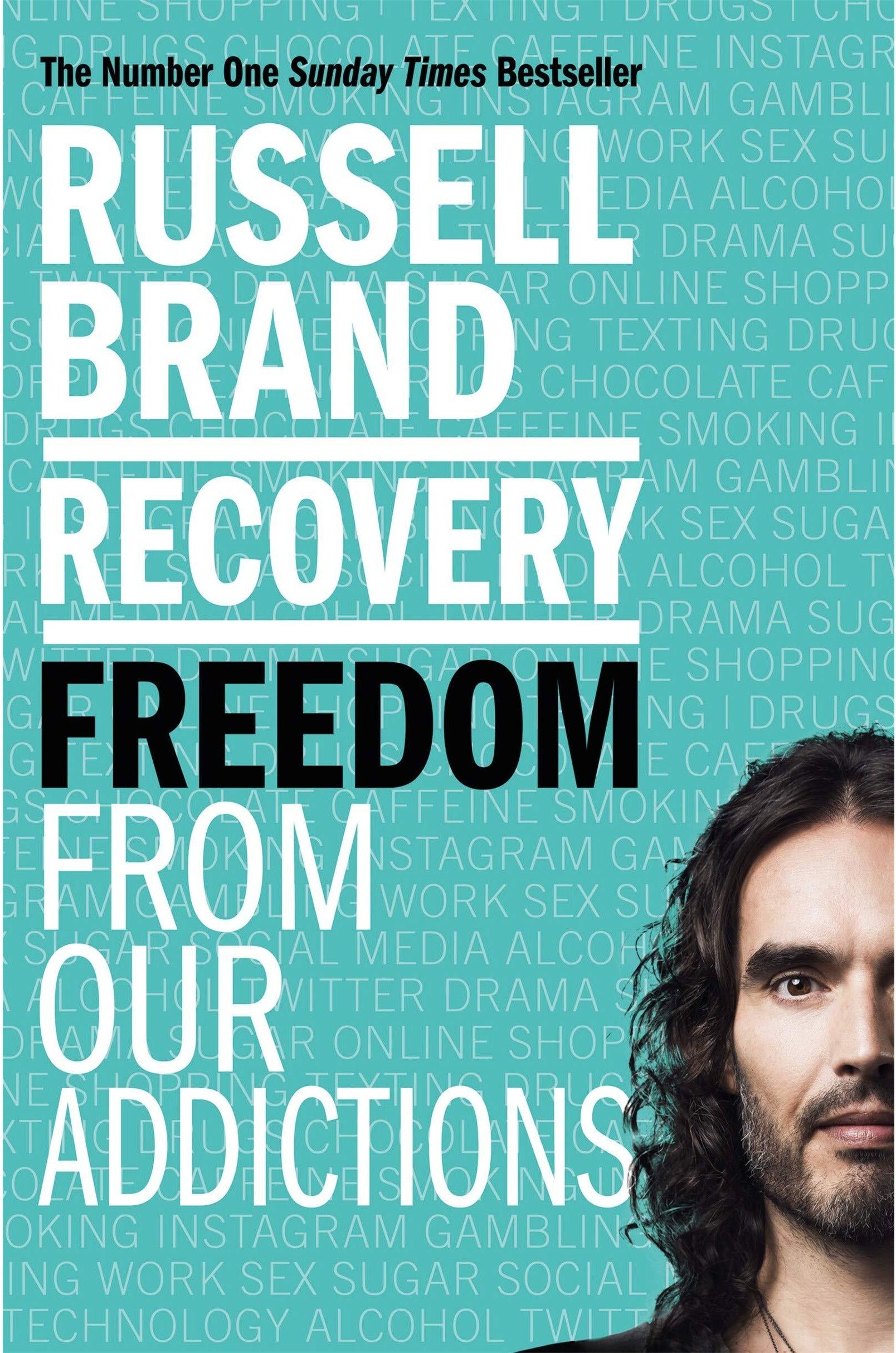
Bluebird Recovery - Freedom From Our AddictionsThe Number One Sunday Times Bestseller from Russell Brand. 'This is the age of addiction, a condition so epidemic, so all encompassing and ubiquitous that unless you are fortunate enough to be an extreme case, you probably don't know that you have it. What unhealthy habits and attachments are holding your life together? Are you unconsciously dependent on food? Bad relationships? A job that doesn't fulfill you? Numb, constant perusal of your phone, looking for what? My qualification for writing this book is not that I am better than you, it's that I am worse. I am an addict, addicted to drugs, alcohol, sex, money, love and fame.' The program in Recovery has given Russell Brand freedom from all addictions and it will do the same for you. This system offers nothing less than liberation from self-centredness, a new perspective, freedom from the illusion of suffering for anyone who is willing to take the necessary steps.4,95 £*Shipping: 1,99 £Secure redirect to the provider
-
What are the differences between deontological ethics and utilitarian ethics?
Deontological ethics, also known as duty-based ethics, focuses on the inherent rightness or wrongness of actions themselves, regardless of their consequences. It emphasizes following moral rules and duties, such as telling the truth or keeping promises, based on principles like the categorical imperative. On the other hand, utilitarian ethics, also known as consequentialist ethics, prioritizes the outcomes or consequences of actions. It aims to maximize overall happiness or well-being for the greatest number of people, often through the calculation of benefits and harms. While deontological ethics emphasizes duty and rules, utilitarian ethics prioritizes the greatest good for the greatest number. **
-
What is the difference between deontological ethics and utilitarian ethics?
Deontological ethics, also known as duty-based ethics, focuses on the inherent rightness or wrongness of actions themselves, regardless of their consequences. This means that certain actions are considered morally right or wrong based on whether they adhere to a set of rules or principles. On the other hand, utilitarian ethics, also known as consequentialist ethics, evaluates the morality of actions based on their outcomes or consequences. In utilitarianism, the rightness or wrongness of an action is determined by its ability to produce the greatest overall happiness or pleasure for the greatest number of people. **
-
How can one justify euthanasia from a utilitarian and deontological perspective?
From a utilitarian perspective, euthanasia can be justified if it results in the greatest overall happiness and minimizes suffering for the individual and their loved ones. If the person is in unbearable pain and their quality of life is extremely poor, euthanasia may be seen as the most compassionate choice to end their suffering. From a deontological perspective, euthanasia can be justified if it respects the individual's autonomy and right to make decisions about their own life and death. If the person has made a well-informed and voluntary decision to end their life, then it can be seen as morally permissible to honor their wishes. However, deontological ethics also emphasize the importance of respecting the sanctity of life, so the decision to pursue euthanasia should be carefully considered in light of these conflicting principles. **
-
How can euthanasia be justified from a utilitarian and deontological perspective?
From a utilitarian perspective, euthanasia can be justified if it results in the greatest overall happiness and minimizes suffering. If a terminally ill patient is in extreme pain and has no hope of recovery, euthanasia could be seen as a compassionate act that ends their suffering. From a deontological perspective, euthanasia can be justified if it upholds the principle of respecting an individual's autonomy and right to make decisions about their own life. If a person has made a rational and informed decision to end their life, then respecting their autonomy could be seen as a moral duty. However, deontological ethics also emphasize the importance of not treating individuals as mere means to an end, so careful consideration must be given to ensure that euthanasia is not being used for ulterior motives. **
* All prices are inclusive of VAT and, if applicable, plus shipping costs. The offer information is based on the details provided by the respective shop and is updated through automated processes. Real-time updates do not occur, so deviations can occur in individual cases. ** Note: Parts of this content were created by AI.