Buy rebelbee.eu ?
We are moving the project
rebelbee.eu .
Are you interested in purchasing the domain
rebelbee.eu ?
domain@kv-gmbh.de · 0541-91531010
Buy rebelbee.eu ?
Which Santoku?
When choosing a Santoku knife, it is important to consider the blade material, handle design, and overall comfort and balance of the knife. High-quality Santoku knives are typically made of high-carbon stainless steel for durability and sharpness. Look for a knife with a comfortable handle that provides a secure grip to prevent slipping during use. Ultimately, the best Santoku knife for you will depend on your personal preferences and cooking style. **
What is a Santoku used for?
A Santoku knife is a versatile Japanese knife that is used for a variety of kitchen tasks. Its name translates to "three virtues" or "three uses," referring to its ability to handle slicing, dicing, and mincing. The Santoku is designed for precision cutting, making it ideal for preparing vegetables, fruits, and boneless meats. Its wide blade and sharp edge make it well-suited for both chopping and slicing, making it a popular choice for home cooks and professional chefs alike. **

Similar search terms for Santoku
Top-Angebote
Products related to Santoku:
-
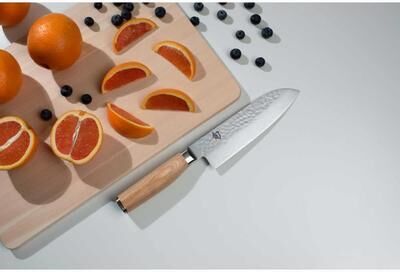
Kasumi 13cm Santoku KnifeThis Kasumi 13cm santoku knife is made from 32 layer Damascus steel with a 59-60 Rockwell hardness. The full tang laminated wooden handle is riveted for extra strength and durability. The 13cm santoku knife is great for medium sized vegetables especially courgettes and aubergines. Made in Seki, Japan. Knives are not for sale to persons under the age of 18. - all knives and bladed products are delivered by Age Verified Delivery (AVD). The carrier may request proof of age in order to deliver your parcel. If proof of age is not available, or the recipient is underage, the carrier will refuse to deliver.119,95 £*Shipping: 0,00 £Secure redirect to the provider
-
Scanpan Classic 12.5cm Santoku KnifeThe Scanpan Classic 12.5cm Santoku is designed to help you cut paper thin slices on food, as well as dice finely. The Scanpan Classic 12.5cm Santoku contains a scalloped edge blades to help prevent ingredients from sticking to the knife. Part of the Scanpan Classic knife collection. Knives are not for sale to persons under the age of 18. - all knives and bladed products are delivered by Age Verified Delivery (AVD). The carrier may request proof of age in order to deliver your parcel. If proof of age is not available, or the recipient is underage, the carrier will refuse to deliver.39,60 £*Shipping: 3,50 £Secure redirect to the provider
-
Scanpan Classic 18cm Santoku KnifeThe Scanpan Classic 18cm Santoku is designed to help you cut paper thin slices on food, as well as dice finely. The Scanpan Classic 18cm Santoku contains a scalloped edge blades to help prevent ingredients from sticking to the knife. Part of the Scanpan Classic knife collection. Knives are not for sale to persons under the age of 18. - all knives and bladed products are delivered by Age Verified Delivery (AVD). The carrier may request proof of age in order to deliver your parcel. If proof of age is not available, or the recipient is underage, the carrier will refuse to deliver.53,10 £*Shipping: 0,00 £Secure redirect to the provider



-
Which is better, a Santoku knife or a chef's knife?
The choice between a Santoku knife and a chef's knife ultimately depends on personal preference and the specific tasks you will be using the knife for. Santoku knives are known for their versatility and are great for slicing, dicing, and mincing, making them a popular choice for everyday cooking. On the other hand, chef's knives are more all-purpose and can handle a wider range of tasks, including chopping, slicing, and even some light cleaver work. If you are looking for a knife that can handle a variety of tasks, a chef's knife may be the better option. However, if you prioritize precision and control in your cutting, a Santoku knife may be the better choice. **
-
'Participate or empower?'
Participate and empower are both important concepts in creating positive change. Participating involves actively engaging in activities, discussions, and decision-making processes. Empowering, on the other hand, involves giving individuals the tools, resources, and support they need to take control of their own lives and make their own decisions. Both are important in creating inclusive and sustainable change, as participation allows for diverse perspectives and voices to be heard, while empowerment enables individuals to take ownership of their own lives and communities. Ultimately, a combination of both participation and empowerment is necessary for creating meaningful and lasting change. **
-
What are unconventional peoples?
Unconventional peoples are individuals who do not conform to traditional societal norms or expectations. They may have unique beliefs, lifestyles, or ways of expressing themselves that deviate from the mainstream. Unconventional peoples often challenge the status quo and may be seen as nonconformist or rebellious by others. They may also be creative, innovative, and open-minded in their approach to life. **
-
What was the relationship between despotism and freedom during the French Revolution?
During the French Revolution, despotism and freedom were in constant tension with each other. The revolution aimed to overthrow the despotic monarchy and establish a more democratic system that would guarantee freedom and equality for all citizens. However, the revolutionary government often resorted to authoritarian measures to maintain control, leading to periods of repression and limitations on individual freedoms. Ultimately, the struggle between despotism and freedom during the French Revolution highlights the complexities and challenges of transitioning from a despotic regime to a more democratic society. **


Do you like unconventional thinkers?
Yes, I appreciate unconventional thinkers because they often bring fresh perspectives and innovative ideas to the table. Their ability to think outside the box can lead to creative solutions and breakthroughs in various fields. Embracing unconventional thinking can lead to new opportunities and advancements that may not have been considered otherwise. **
What is an unconventional film?
An unconventional film is a movie that breaks away from traditional storytelling and filmmaking techniques. It may challenge the audience's expectations by using non-linear narratives, experimental visuals, or unconventional editing styles. These films often push the boundaries of the medium and can be thought-provoking, polarizing, or even controversial. Unconventional films can offer a fresh perspective and unique artistic expression, making them stand out in the world of cinema. **
Top-Angebote
Products related to Santoku:
-
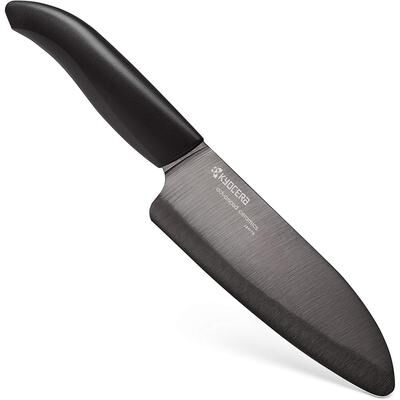
Kyocera Revolution Series 5.5-inch Ceramic Santoku KnifeBecome the chef you've always dreamed of being with a 5.5-inch Kyocera ceramic knife. This resin-handled knife gives you comfort and balance, and the ceramic blade is ground by diamond wheels, providing ultimate sharpness for precision cutting.60,00 $*Shipping: 0,00 $Secure redirect to the provider
-
Kyocera Advanced Ceramic Revolution Series 5-1/2-inch Santoku Knife, Black BladeCeramic blades are made from Kyocera's proprietary zirconia material produced in Japan for exceptional quality and beauty. Ultra-sharp, pure advanced ceramic blades will maintain their edge up to 10x longer than steel blades60,51 $*Shipping: 0,00 $Secure redirect to the provider
-
Kasumi 13cm Santoku KnifeThis Kasumi 13cm santoku knife is made from 32 layer Damascus steel with a 59-60 Rockwell hardness. The full tang laminated wooden handle is riveted for extra strength and durability. The 13cm santoku knife is great for medium sized vegetables especially courgettes and aubergines. Made in Seki, Japan. Knives are not for sale to persons under the age of 18. - all knives and bladed products are delivered by Age Verified Delivery (AVD). The carrier may request proof of age in order to deliver your parcel. If proof of age is not available, or the recipient is underage, the carrier will refuse to deliver.119,95 £*Shipping: 0,00 £Secure redirect to the provider
-
Scanpan Classic 12.5cm Santoku KnifeThe Scanpan Classic 12.5cm Santoku is designed to help you cut paper thin slices on food, as well as dice finely. The Scanpan Classic 12.5cm Santoku contains a scalloped edge blades to help prevent ingredients from sticking to the knife. Part of the Scanpan Classic knife collection. Knives are not for sale to persons under the age of 18. - all knives and bladed products are delivered by Age Verified Delivery (AVD). The carrier may request proof of age in order to deliver your parcel. If proof of age is not available, or the recipient is underage, the carrier will refuse to deliver.39,60 £*Shipping: 3,50 £Secure redirect to the provider
-
Which Santoku?
When choosing a Santoku knife, it is important to consider the blade material, handle design, and overall comfort and balance of the knife. High-quality Santoku knives are typically made of high-carbon stainless steel for durability and sharpness. Look for a knife with a comfortable handle that provides a secure grip to prevent slipping during use. Ultimately, the best Santoku knife for you will depend on your personal preferences and cooking style. **
-
What is a Santoku used for?
A Santoku knife is a versatile Japanese knife that is used for a variety of kitchen tasks. Its name translates to "three virtues" or "three uses," referring to its ability to handle slicing, dicing, and mincing. The Santoku is designed for precision cutting, making it ideal for preparing vegetables, fruits, and boneless meats. Its wide blade and sharp edge make it well-suited for both chopping and slicing, making it a popular choice for home cooks and professional chefs alike. **
-
Which is better, a Santoku knife or a chef's knife?
The choice between a Santoku knife and a chef's knife ultimately depends on personal preference and the specific tasks you will be using the knife for. Santoku knives are known for their versatility and are great for slicing, dicing, and mincing, making them a popular choice for everyday cooking. On the other hand, chef's knives are more all-purpose and can handle a wider range of tasks, including chopping, slicing, and even some light cleaver work. If you are looking for a knife that can handle a variety of tasks, a chef's knife may be the better option. However, if you prioritize precision and control in your cutting, a Santoku knife may be the better choice. **
-
'Participate or empower?'
Participate and empower are both important concepts in creating positive change. Participating involves actively engaging in activities, discussions, and decision-making processes. Empowering, on the other hand, involves giving individuals the tools, resources, and support they need to take control of their own lives and make their own decisions. Both are important in creating inclusive and sustainable change, as participation allows for diverse perspectives and voices to be heard, while empowerment enables individuals to take ownership of their own lives and communities. Ultimately, a combination of both participation and empowerment is necessary for creating meaningful and lasting change. **
Similar search terms for Santoku
-
Scanpan Classic 18cm Santoku KnifeThe Scanpan Classic 18cm Santoku is designed to help you cut paper thin slices on food, as well as dice finely. The Scanpan Classic 18cm Santoku contains a scalloped edge blades to help prevent ingredients from sticking to the knife. Part of the Scanpan Classic knife collection. Knives are not for sale to persons under the age of 18. - all knives and bladed products are delivered by Age Verified Delivery (AVD). The carrier may request proof of age in order to deliver your parcel. If proof of age is not available, or the recipient is underage, the carrier will refuse to deliver.53,10 £*Shipping: 0,00 £Secure redirect to the provider
-
What are unconventional peoples?
Unconventional peoples are individuals who do not conform to traditional societal norms or expectations. They may have unique beliefs, lifestyles, or ways of expressing themselves that deviate from the mainstream. Unconventional peoples often challenge the status quo and may be seen as nonconformist or rebellious by others. They may also be creative, innovative, and open-minded in their approach to life. **
-
What was the relationship between despotism and freedom during the French Revolution?
During the French Revolution, despotism and freedom were in constant tension with each other. The revolution aimed to overthrow the despotic monarchy and establish a more democratic system that would guarantee freedom and equality for all citizens. However, the revolutionary government often resorted to authoritarian measures to maintain control, leading to periods of repression and limitations on individual freedoms. Ultimately, the struggle between despotism and freedom during the French Revolution highlights the complexities and challenges of transitioning from a despotic regime to a more democratic society. **
-
Do you like unconventional thinkers?
Yes, I appreciate unconventional thinkers because they often bring fresh perspectives and innovative ideas to the table. Their ability to think outside the box can lead to creative solutions and breakthroughs in various fields. Embracing unconventional thinking can lead to new opportunities and advancements that may not have been considered otherwise. **
-
What is an unconventional film?
An unconventional film is a movie that breaks away from traditional storytelling and filmmaking techniques. It may challenge the audience's expectations by using non-linear narratives, experimental visuals, or unconventional editing styles. These films often push the boundaries of the medium and can be thought-provoking, polarizing, or even controversial. Unconventional films can offer a fresh perspective and unique artistic expression, making them stand out in the world of cinema. **
* All prices are inclusive of VAT and, if applicable, plus shipping costs. The offer information is based on the details provided by the respective shop and is updated through automated processes. Real-time updates do not occur, so deviations can occur in individual cases. ** Note: Parts of this content were created by AI.